
BMW M3 Parts: Engines and Parts by Generation

Researched by Craig Sandeman
Automotive researcher and writer on South African used car parts.
· · 4 min read · LinkedIn
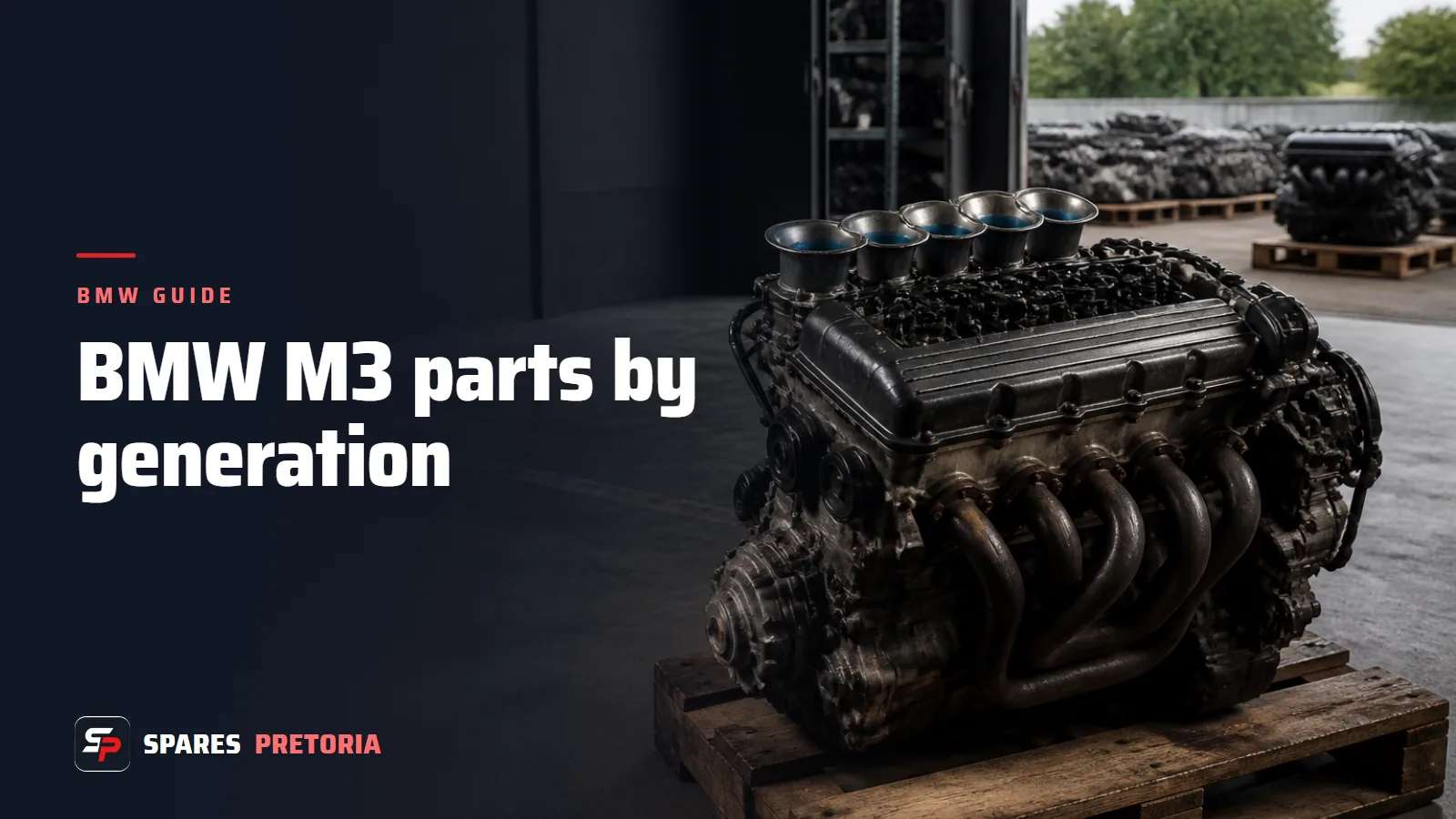
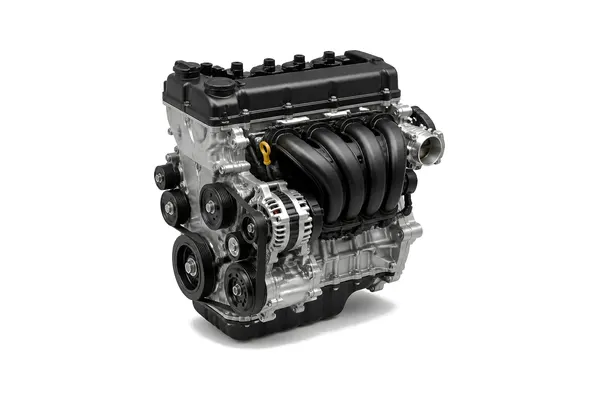
The first four BMW M3 generations used a four-cylinder (the E30's S14), straight-sixes in the E36 and the E46 (the S54), and a 4.0-litre V8 from 2007. None was a V6. BMW records that 700 E36 M3s were assembled from kits at its Rosslyn plant in South Africa. M3 engine parts never come from an ordinary 3 Series.
Key takeaways
- E30 M3 (1985): S14 four-cylinder; CAR magazine says South Africa did not get it.
- E36 M3 (1992): first six-cylinder M3, 210 kW, later 236 kW.
- BMW: 700 E36 M3s were built from CKD kits at Rosslyn, South Africa.
- E46 M3: the S54 3.2-litre six; 2007 M3: a 3,999 cc V8, 309 kW.
- Body and cabin parts may be shared with the normal 3 Series; confirm with the VIN.
In this guide
Finding parts for a BMW M3 starts with knowing which M3 you have. In its first four generations the M3 used a four-cylinder, two different straight-sixes and then a V8, and each generation is built on the 3 Series of its day. Some body and cabin parts may cross over from an ordinary 3 Series of the same generation; the engine and its ancillaries never do.
South Africa has its own M3 story, too. BMW's records show that 700 second-generation M3s were assembled from kits at BMW's Rosslyn plant in South Africa, alongside the cars built in Germany.
M3 generations and engines
The figures below are from BMW's media information "Twenty Years of the BMW M3" (July 2007) unless another source is named.
| Generation | Launched | Engine | Output (European spec) |
|---|---|---|---|
| First (E30) | 1985 | S14 four-cylinder, 2.3 litres (2.5 in the Sport Evolution) | 144 to 175 kW depending on version |
| Second (E36) | 1992 | Straight-six, 3.0 litres, later 3.2 | 210 kW, later 236 kW |
| Third (E46) | end of 2000 | S54 straight-six, 3,246 cc | 252 kW |
| Fourth | 2007 | V8, 3,999 cc | 309 kW |
First generation (E30): the S14 four-cylinder
The first M3 used a four-cylinder engine, the S14, developed from a production block with a four-valve head that BMW's engineers made by "cutting off" two combustion chambers from the six-cylinder head.
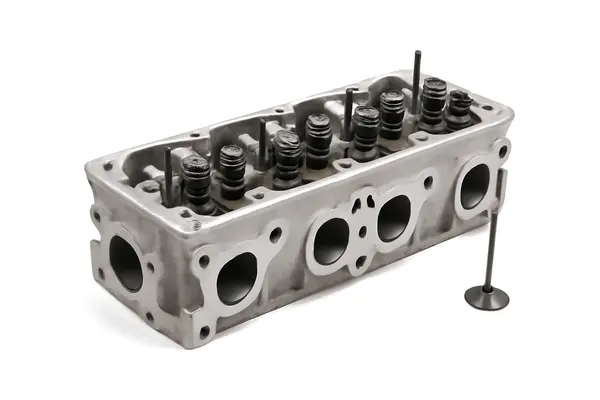
BMW chose four cylinders over six partly to save weight and partly because the longer six-cylinder crankshaft vibrated earlier at high revs. CAR magazine notes that South Africa did not get this first M3; the locally built 325iS, the "Gusheshe", filled that gap (CAR magazine, May 2018). Parts for the E30 range are on our E30 parts page.
Second generation (E36): built at Rosslyn too
The 1992 M3 was the first with a six-cylinder engine: 3.0 litres, 210 kW/286 hp and 320 Nm. Later versions grew to 236 kW/321 hp.
A US E36 M3 is a different car under the bonnet BMW of North America names the engine as the S50, replaced in US cars by the 3.2-litre S52 (BMW NA 50 Stories, chapter 29), so a US-market E36 M3 is not a guide to what a European or South African car has under the bonnet.
BMW says almost 72,000 of this generation left its Regensburg plant over seven years of production, "joined by another 700 units built as completely knocked down (CKD) kits at BMW's Rosslyn Plant in South Africa". For body and cabin parts, our E36 parts page covers the 3 Series it is based on.
Third generation (E46): the S54
The E46 M3 used the S54, a 3.2-litre straight-six which BMW of North America says shares only its basic format with other BMW sixes, with "virtually all of its engineering details" unique (BMW of North America press kit). In European form it made 252 kW/343 hp. That is why an ordinary E46 engine part is no use on an M3 engine, even though many body parts look identical. Our E46 3 Series parts page covers the regular cars.
Fourth generation (2007): the first V8 M3
The 2007 M3 was the first with eight cylinders: a 3,999 cc V8 with 309 kW/420 hp and 400 Nm, revving to 8,400 rpm (BMW media information, "The new BMW M3", July 2007). For the 3 Series of that era, see our E90 parts page.

What crosses over from a normal 3 Series, and what does not
- Never crosses over: the engine and its ancillaries. Every M3 generation above had an engine that the ordinary 3 Series did not.
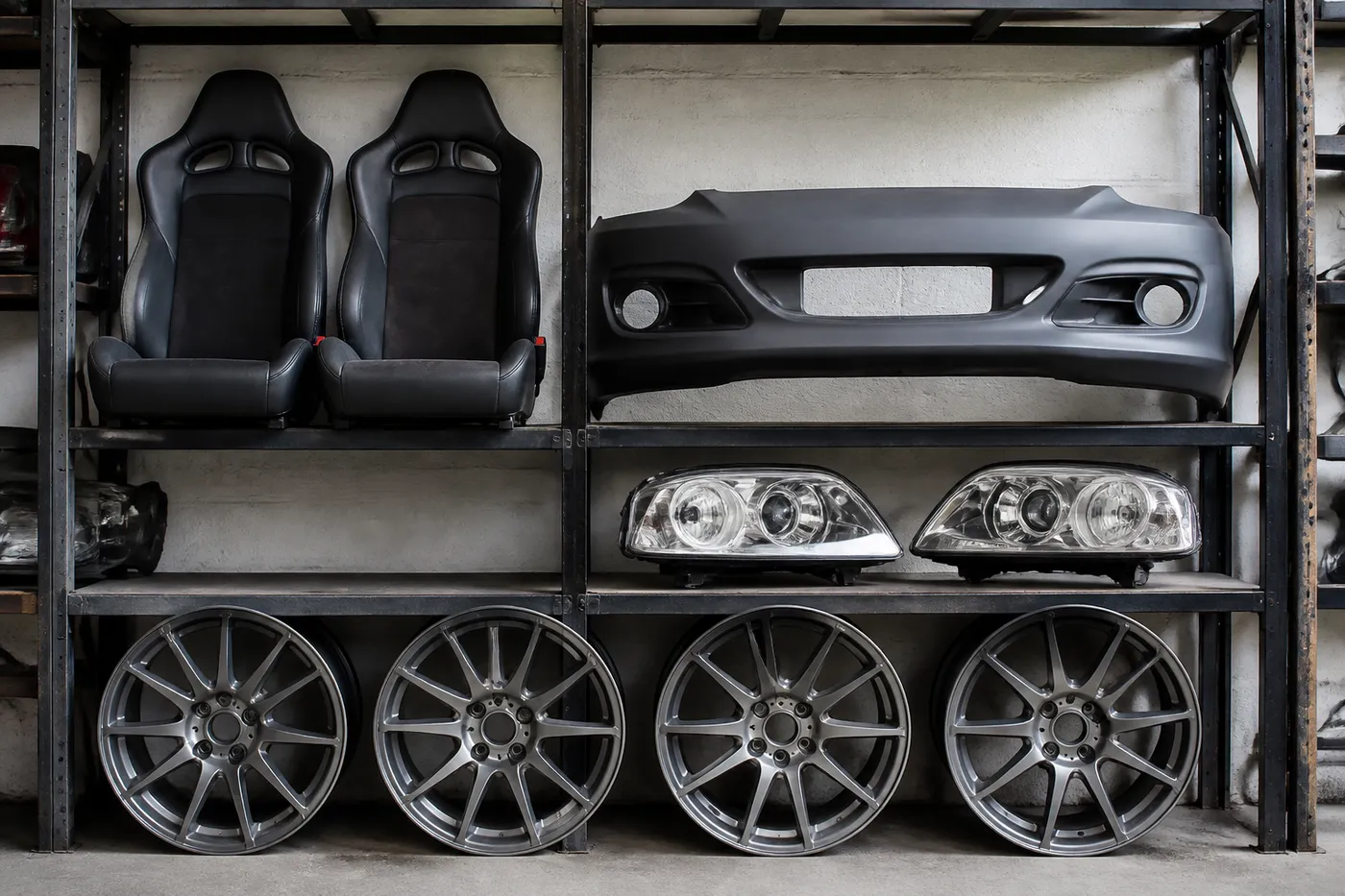
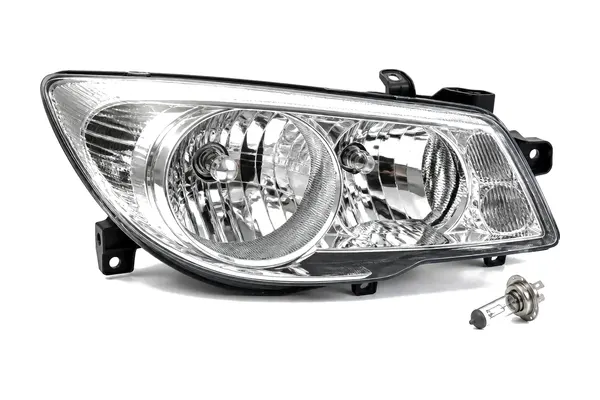
- Check with the VIN: body panels, lights, glass and interior parts. Some are shared with the ordinary 3 Series and some are M3-specific, and two parts can look alike while fitting differently.
What to send us for M3 parts
Send the year, the generation, the VIN from your licence disc and a photo of the part you need, plus any number printed on it.
Stripped, tested and matched by VIN Our parts are stripped from accident-damaged vehicles and tested, and we have been stripping and selling used parts for over 15 years. If the part is one an ordinary 3 Series shares, that widens the search, and we will say so.
You can also browse all our used BMW parts, or read our M5 guide for BMW's larger M saloon.
Used parts for this job
Tap a part to ask us for a price.
Sources
- Twenty years of the BMW M3 (media information, July 2007) — BMW Group
- 50 Stories for 50 Years, chapter 29: the third-generation BMW M5 [E39] — BMW of North America
- BMW M3 (E46) press kit: the S54 engine — BMW of North America
- The new BMW M3 (media information, July 2007) — BMW Group
- 'Gusheshe' resurrected! BMW SA reveals restored 325iS — CAR magazine
FAQ
Questions people ask
What engine is in the BMW M3?
It depends on the generation: the E30 used the S14 four-cylinder, the E36 a 3.0-litre (later 3.2-litre) straight-six, the E46 the 3.2-litre S54 straight-six, and the 2007 generation a 4.0-litre V8.
Is the M3 a V6 or V8?
Of the first four generations, only the 2007 M3 had a V8, a 3,999 cc unit making 309 kW. The earlier cars used a four-cylinder or straight-six engines. None of them was a V6.