
BMW Cooling System: How It Works and Which Parts Fail

Researched by Craig Sandeman
Automotive researcher and writer on South African used car parts.
· · 6 min read · LinkedIn
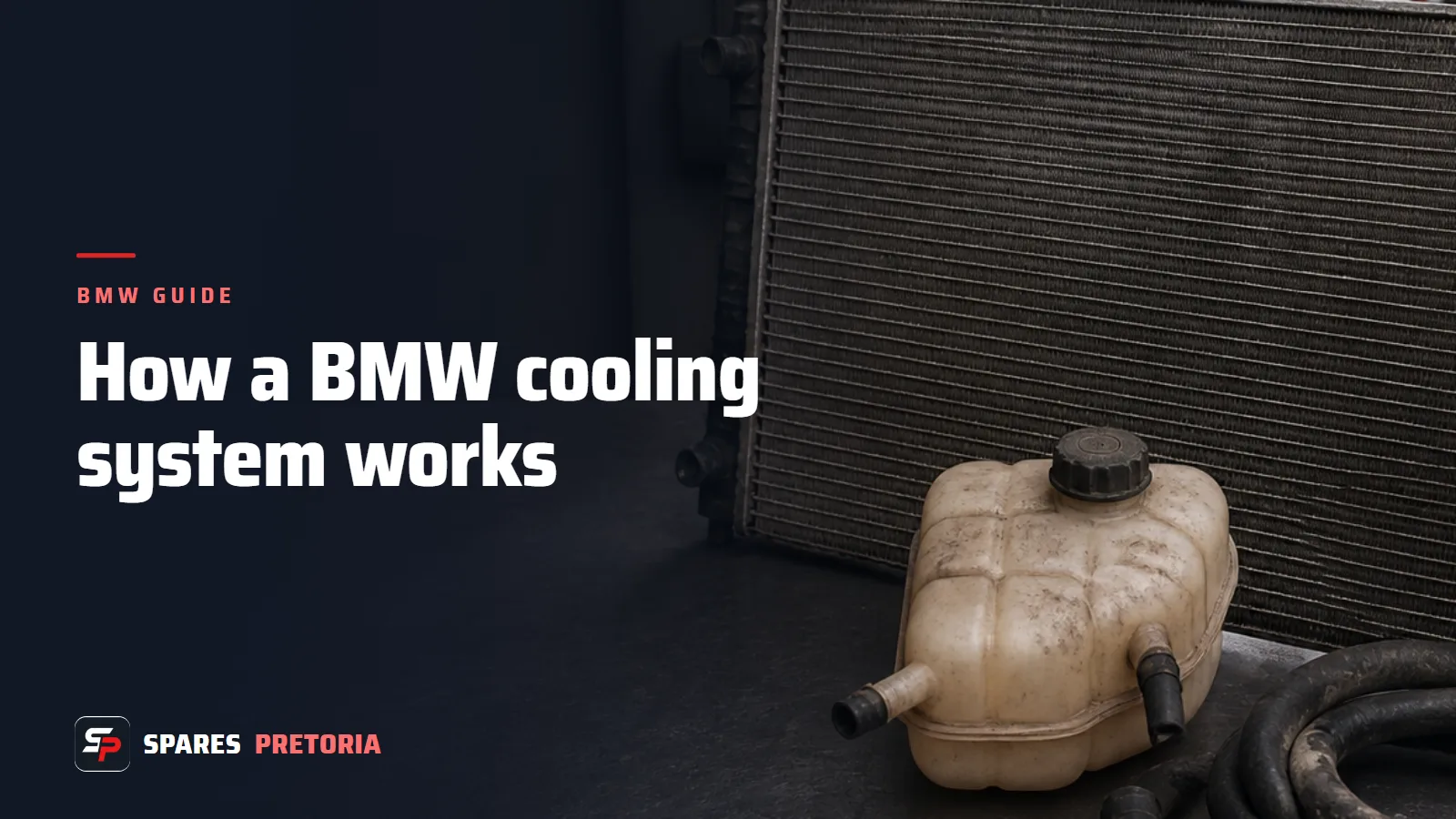
A BMW cooling system is a sealed, pressurised loop: the coolant pump moves coolant through the engine, the thermostat sends it to the radiator once the engine is warm, and the expansion tank absorbs the extra volume. BMW's NG6 (N52) straight-six of 2004–2005 uses an electric water pump; older BMW engines, such as the sixes in the E46 and E39, use a belt-driven one.
Key takeaways
- The loop runs at roughly 1.0–1.5 bar, which raises the coolant boiling point to 115–130 °C (HELLA).
- BMW South Africa confirmed in 2005 that the NG6 (N52) straight-six uses an electric water pump.
- Hoses, expansion tanks, pumps and thermostats are the usual failures on older BMWs.
- Radiators and housings are good used buys; hoses, caps and thermostats are better new.
- Send the year, engine code and VIN so we match the exact part.
In this guide
A BMW cooling system is a sealed, pressurised loop: a pump pushes coolant through the engine, a thermostat decides when that hot coolant goes to the radiator, and an expansion tank takes up the extra volume as it heats. When one part in the loop fails, the engine overheats, and on an older BMW the usual culprit is a tired plastic or rubber part rather than the engine itself.
This guide is the overview: how the system fits together, which BMW engines use a belt-driven pump and which use an electric one, and which parts are sensible to buy used. If you already know the car is overheating and want to narrow it down to the pump, thermostat or radiator, our water pump, thermostat and radiator symptom guide goes part by part.
How a BMW cooling system works
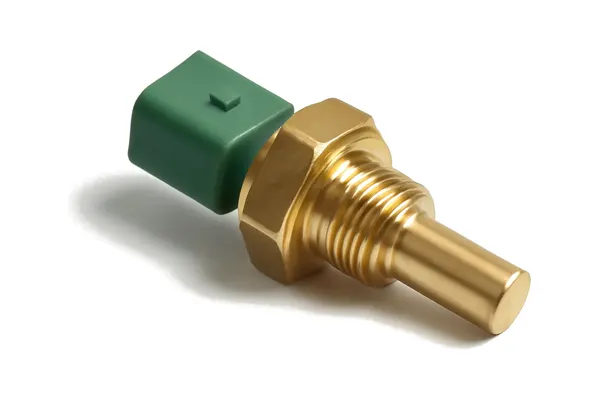
Every modern engine cooling system is built from the same set of parts: a radiator, a thermostat, a coolant pump (mechanical or electric), an expansion tank and its hoses, an engine fan and a temperature sensor that reports to the engine computer and the gauge (HELLA Tech World, engine cooling). BMW uses the same layout. What changes from one BMW engine to the next is how the pump is driven and how cleverly the system is controlled.
Two things about the loop matter when you are diagnosing it:
- It runs under pressure. A closed cooling circuit sits at roughly 1.0 to 1.5 bar, which lifts the boiling point of the coolant from 100 °C to between 115 °C and 130 °C (HELLA, same source). A cracked expansion tank or a cap that no longer seals lets that pressure go, and the coolant can boil at normal running temperature.
- It has a cold circuit and a hot circuit. Until the engine reaches operating temperature, the thermostat keeps coolant away from the radiator and sends it straight back through the engine, so the car warms up quickly. Once it is hot, the thermostat opens the path to the radiator.
Let it cool before you open anything Because the loop runs at about 1.0 to 1.5 bar with coolant above 100 °C, opening the expansion tank on a hot engine can release scalding coolant. Wait until the engine is cold.
Belt-driven or electric water pump: which BMW engine has which
This is the single most useful thing to know before you ask for a part, because the two pumps are completely different items.
Mechanical pumps on older BMWs
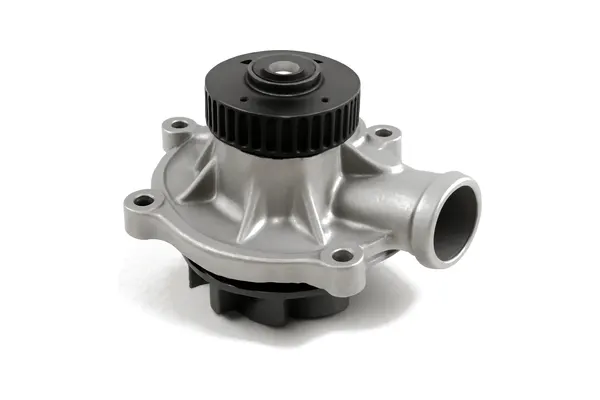
Most coolant pumps are driven mechanically by a toothed belt or a V-ribbed belt (HELLA technical information, coolant pumps), and that is how BMW engines worked until 2004. When BMW launched the 630i that year, it described the new 3.0-litre straight-six as featuring "the world's first electric water pump" (BMW Group PressClub UK, 2004), so a BMW engine designed before that, such as the six-cylinder in an E46 or E39, has a belt-driven pump that turns whenever the engine turns. A mechanical pump is a simple part. The things that wear on it are the bearing, the seal and the vane, and HELLA notes that plastic vanes can become brittle with age.
Electric pumps from the N52 onwards
BMW South Africa's launch material for the 523i, 525i and 530i in 2005 states that the new NG6 straight-six "uses an electric water pump for on-demand control of the coolant flow" (BMW Group PressClub South Africa, 19 July 2005). BMW's US press material later named that engine internally as the N52 and listed "an electric coolant pump" among its features (BMW Group PressClub USA, January 2010).
An electric pump has its own motor and electronics, so it can fail electrically as well as mechanically: HELLA lists an electrical fault (a short circuit or an interruption) alongside worn bearings, seals and vanes as a cause of pump failure.

What wears out first
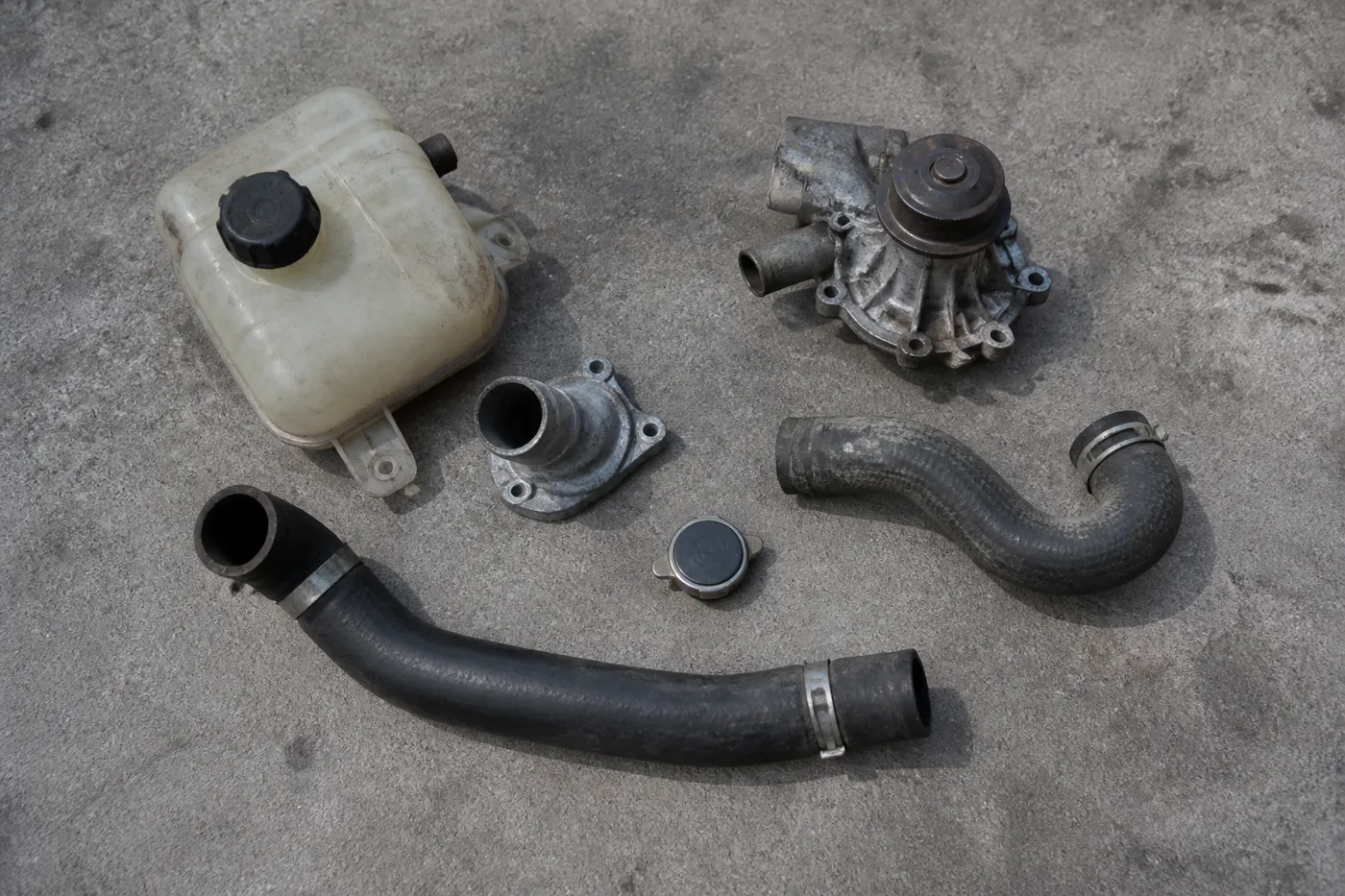
On a BMW that is ten or twenty years old, cooling problems usually start in the plastic and rubber parts, not the metal ones:
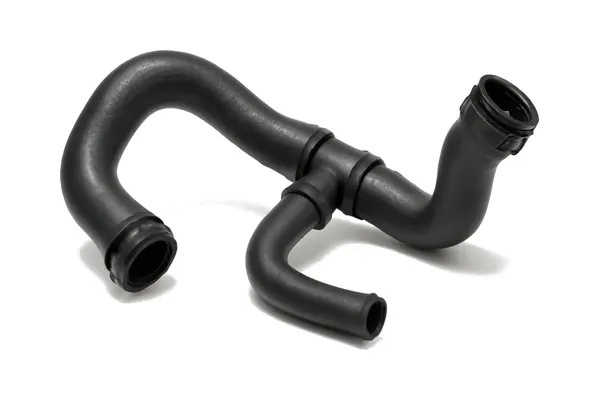
- Hoses harden and crack, especially near clamps and the hot side of the engine.
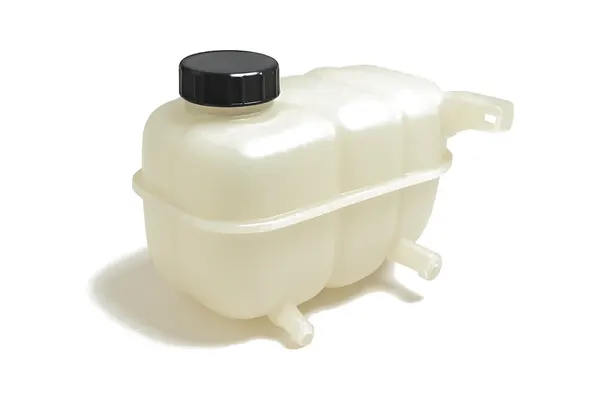
- The expansion tank is plastic and holds pressure every time the car runs. A hairline crack or a cap that no longer seals lets the system lose pressure and coolant.
- The water pump can leak, make bearing noise or simply stop moving enough coolant. HELLA lists noise, loss of coolant and overheating as the three signs of a failing pump.
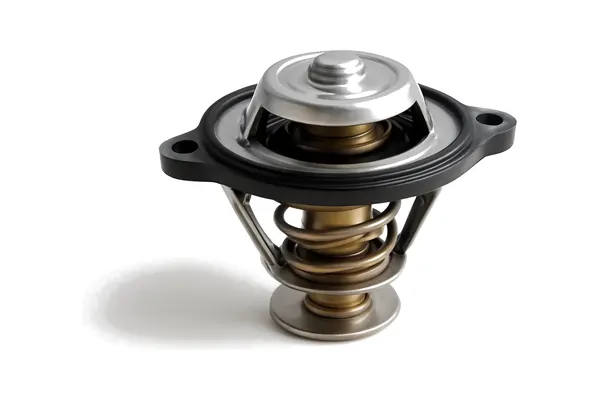
- The thermostat can stick open (slow warm-up) or stick closed (overheating soon after the engine warms up).
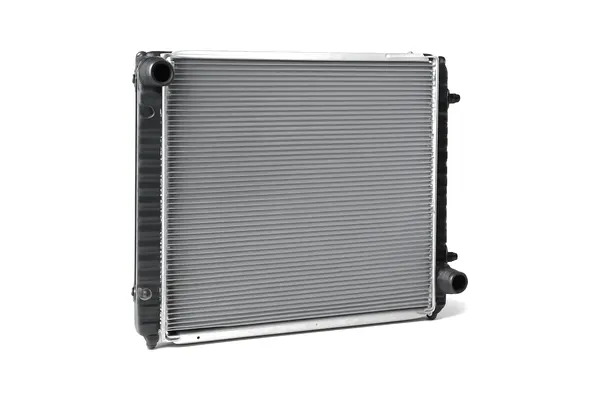
- The radiator can leak at its seams or clog internally.
Old coolant takes other parts with it HELLA links pitting corrosion inside pumps to old, stale coolant with a high chloride content combined with high temperatures. A system that has run on tap water or neglected coolant for years tends to take more than one part with it.
Which cooling parts make sense to buy used
Not every cooling part is a good used buy, and we would rather tell you that than sell you the wrong thing.
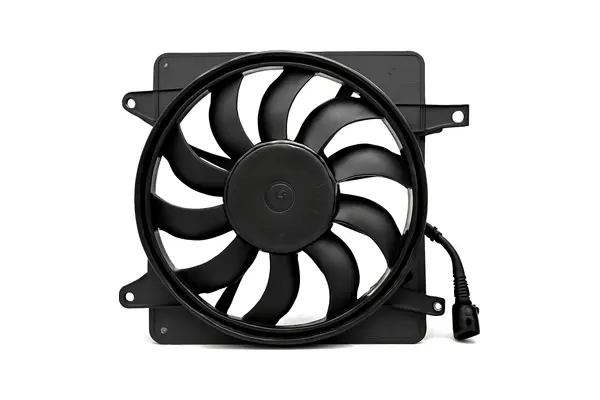
- Good used buys: radiators, fan assemblies, thermostat housings, expansion tank brackets and pipework, and complete front-end cooling packs from accident-damaged cars where the front was not the part that was hit.
- Buy used only with care: electric water pumps. They are expensive new, and a tested used one can make sense, but check the plug and part are right for your engine.
- Usually better new: rubber hoses, the expansion-tank cap and the thermostat itself. These are wear parts and their age is the problem.
Stripped and tested Our parts come from accident-damaged vehicles that we strip, and they are tested before they go out. We have been stripping and selling used parts for over 15 years.
What to send us for a cooling part
Cooling parts change between engines inside the same model, so the model name alone is not enough. Send us:
- The year and model (for example a 2004 E46 325i).
- The engine code if you have it. It is on the engine and in the service book.
- The VIN from the licence disc or the windscreen, which settles the exact part.
- A photo of the old part, especially its plug if it is electric.
If your BMW is an E46 or an E90, the E46 3 Series parts page and the E90 parts page cover the common parts for those cars. For anything else, start with our used BMW parts page, and if the overheating turns out to be in the fuel or ignition side rather than cooling, see the BMW fuel system guide.
Used parts for this job
Tap a part to ask us for a price.
Sources
- Engine cooling — design and function — HELLA Tech World
- Coolant pumps — technical information — HELLA Tech World
- The new BMW 630i Coupé and Convertible (2004) — BMW Group PressClub UK
- BMW 5 Series enters the NG6 era (19 July 2005) — BMW Group PressClub South Africa
- The new 2011 BMW 3 Series Coupe and Convertible — BMW Group PressClub USA
FAQ
Questions people ask
What is a BMW cooling system?
It is the sealed loop that keeps the engine at its working temperature: a coolant pump, a thermostat, a radiator with a fan, an expansion tank and hoses, plus a temperature sensor. BMW's NG6 (N52) straight-six of 2004–2005 uses an electric coolant pump; older engines, such as the sixes in the E46 and E39, use a belt-driven pump.
Can I drive my BMW if the coolant is low?
Only as far as a safe place to stop. Low coolant leads to overheating, and the system runs under pressure (roughly 1.0 to 1.5 bar) with coolant above 100 °C, so let the engine cool completely before opening anything. Then top up and find out where the coolant went.
When to replace a BMW cooling system?
You rarely replace the whole system. Replace the part that has failed: a water pump that is noisy, leaking or not moving coolant; a thermostat that is stuck open or closed; a cracked expansion tank or hose; or a leaking or blocked radiator.